Day 24: In the dreariness of any nameless winter’s day, I sink to the dark chilly cellar of my home, to do a tedious annual task, one that reduces the risk of passing on plant disease from one growing season to the next. Under the gloomy light provided by the single bulb over my laundry tub, I empty, wash and scrub seed trays and dozens of tiny gritty pots with warm soapy water and a brush. 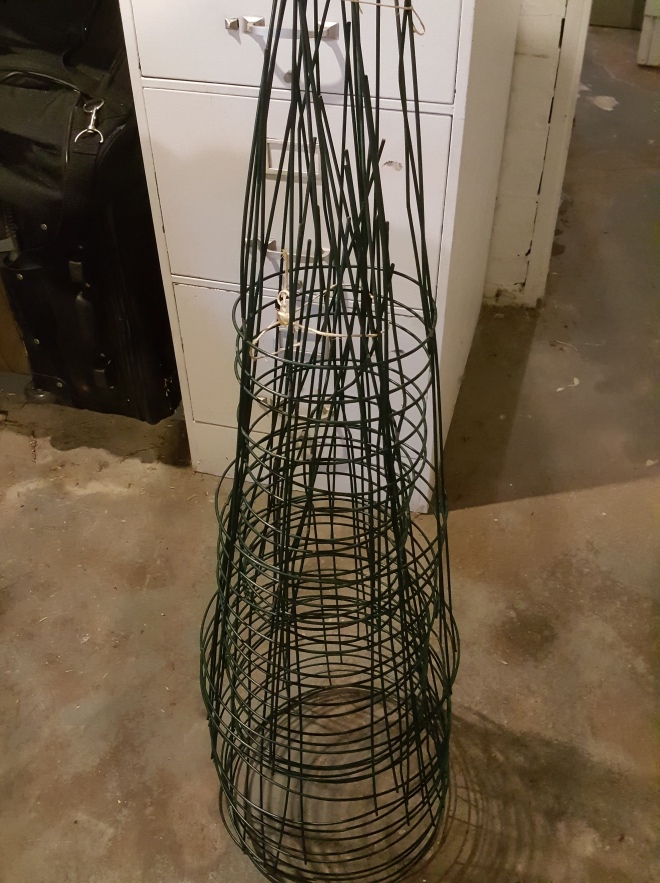 Then I mix a solution of watery but still stinky bleach, and wipe down tomato cages, pruning sheers, and trowels.
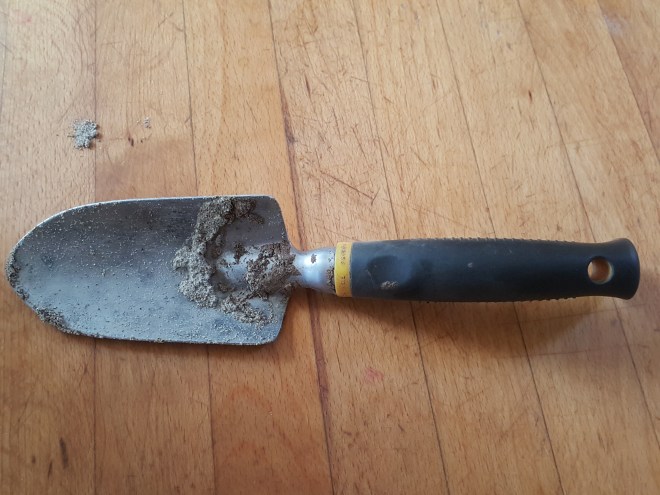
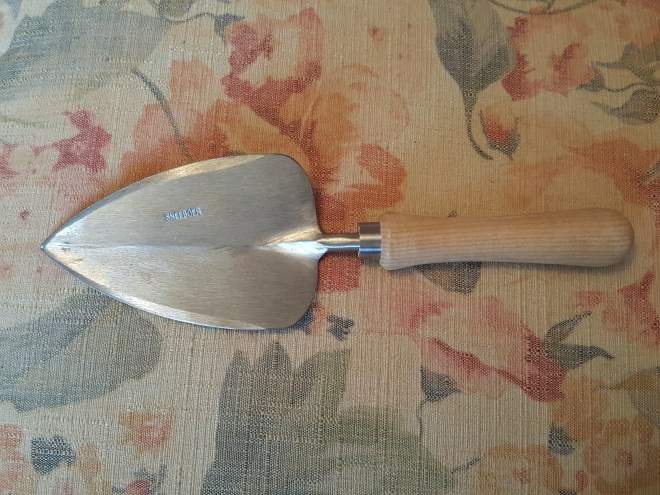
 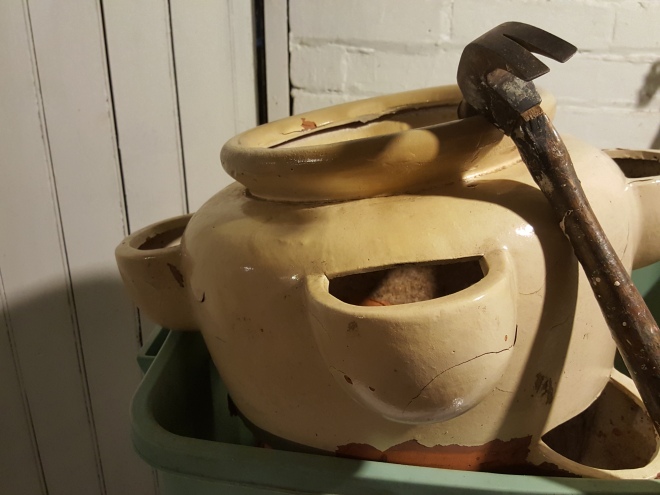 I ruthlessly smash cracked pots to smithereens, make tidy towers of ever-decreasing dimensioned pots, and try to anticipate what I may be missing for the lead up to outdoor growth. This year I made another trip slightly north, to W. Dam Seeds, to heft a substantially sized lumpen mass of bagged transplant soil high into my car, then thump it down and up the porch steps, drag it thudding again off each basement step, prematurely anticipating the victorious moment still more than a month away, when it will be employed for a few basement seedlings that might actually need potting on well before the grass outside turns green. And then I attend to the dismal email response from Speer and Jackson that unequivocally states their fifteen year warranty means nothing for them, that my two simple sandy uses that broke their flimsy border fork at the two rivets amounts to “wear and tear” which they refute is enveloped by any fifteen year unconditional brag printed on the unbroken portion of an English Oak tool shaft. So the old, both to initiate growth and to tend to growth, is now resolved for me for better and far worse.
Plastic: Four years ago my local dollar store was selling impressive towers of the tiniest clay pots I’d ever seen. Perhaps it was the coddler-of-cute-things in me rising up, or perhaps I acted because I have always disliked plastic in any form, and though I knew no one who had tried using clay rather than plastic or peat to start anything under lights, I could not resist buying the tiny masterpieces, in the end due primarily to their price tag. Did the Victorians use plastic? 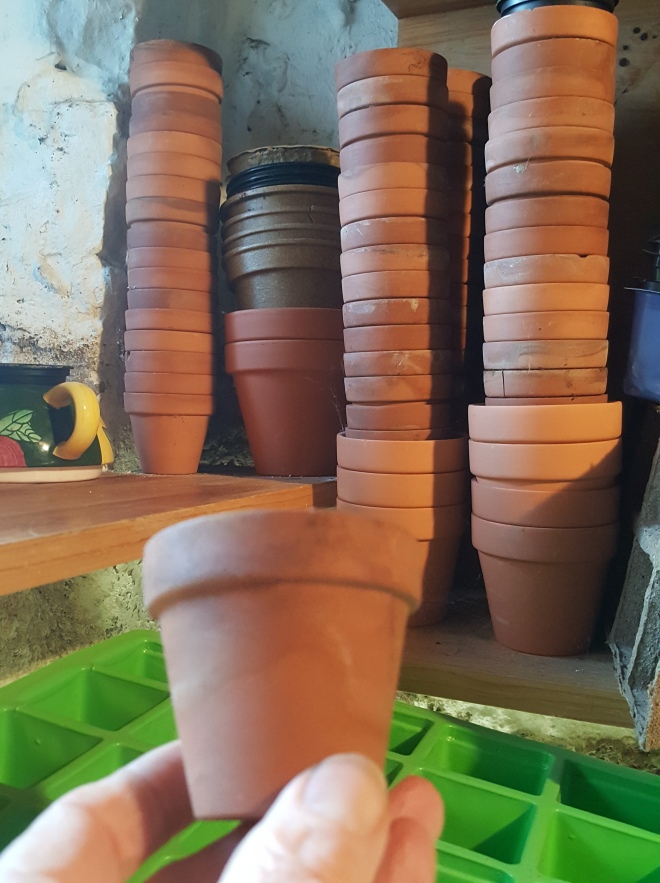
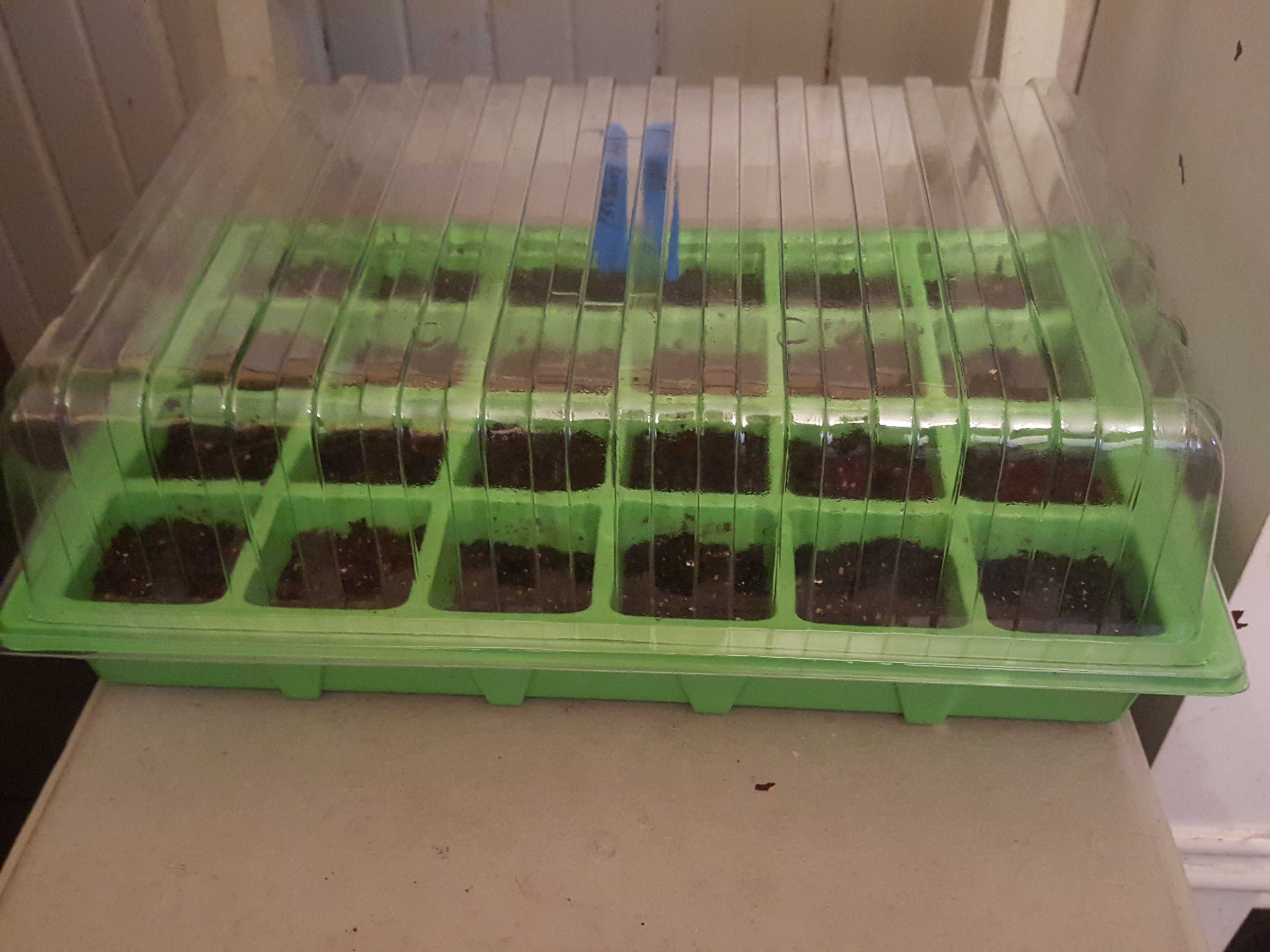
Four years ago I was making all kinds of mistakes with my several gardening attempts, not the least of which was deciding it was entirely up to me when to water things, certainly not up to the obstinate seed start mix in my diminutive basement pots. So nearly nothing I planted germinated. I do know that peat pots (peat is endangered) will kill most things, because the extreme wicking or sponge action of the tiny pot means that it is virtually impossible to ensure the seeds within it stay consistently watered. Too wet, and seeds and seedlings rot quickly. Too dry for even a day, and they’re simply gone. I’ve tried toilet paper rolls and newspaper pots, both of which, for me, promoted white fungus and bottom rot ages before transplant time. Two years ago, I finally caved and bought plastic. I hate to admit it, but for seed starts, it works so far for me like nothing else has. Why doesn’t someone make silicone trays or, even better, something simultaneously moldable, sterile, and biodegradable, such as the recent compressed mycelium (mushroom root) packaging? Would it too rot, dry, or give out far too quickly? The cow patch pots I’ve seen look far too suspiciously like peat pots for me to trust them.
 And new? My Ellagance Lavender is up! Up up and away!
 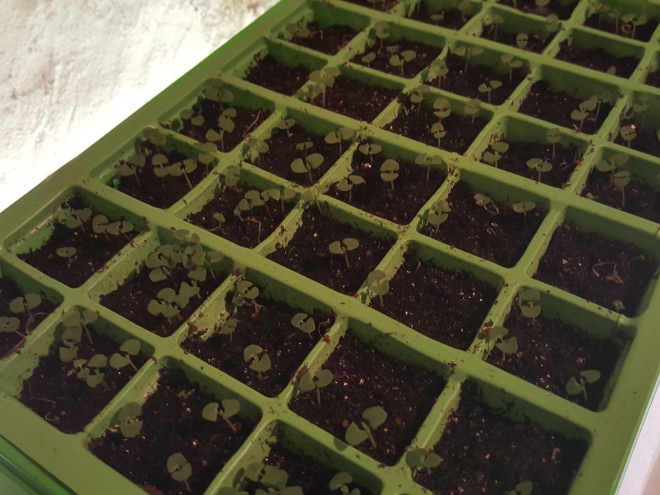 Hidcote, Munstead, and no-name McKenzie seeds, a whole week older, not so much.
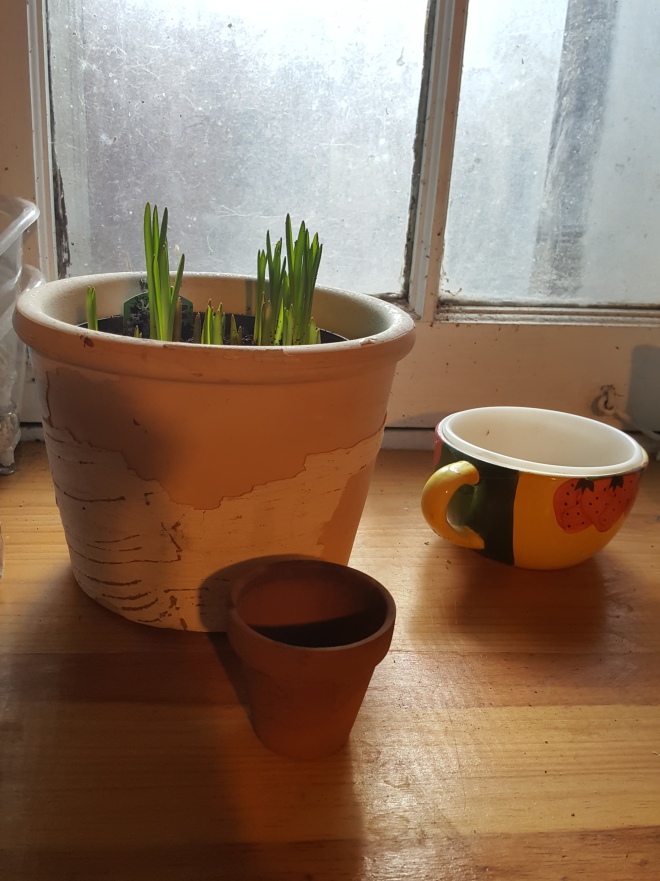
 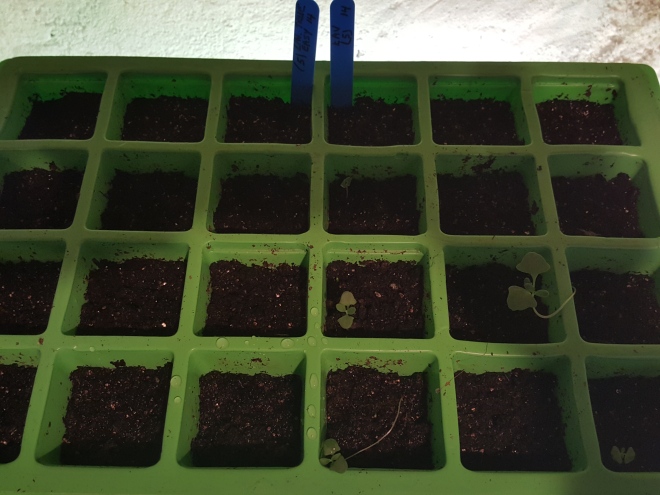 I was advised by a gardener to vernalize lavender seeds for three days in the fridge before planting – but perhaps it is simply the varieties of lavender that stubbornly do not want to regenerate from seed. And the other new? Those brutally abandoned basement residing grape hyacinths (see above) and dahlia tubers, just one week ago given larger pots, appropriate soil, a bit of water and a modest amount of light? They are green and up – up, up, and almost away into the sun to mimic the real and imminent thing we all long for, spring.



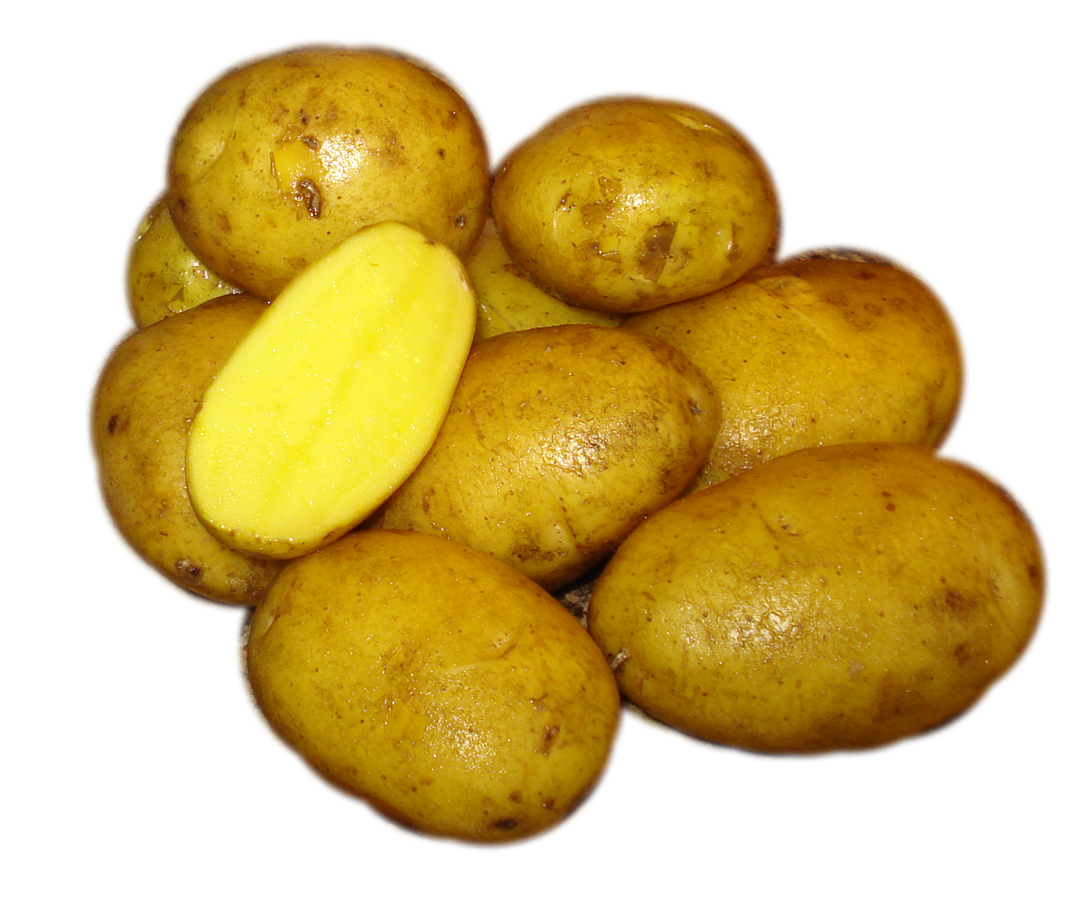
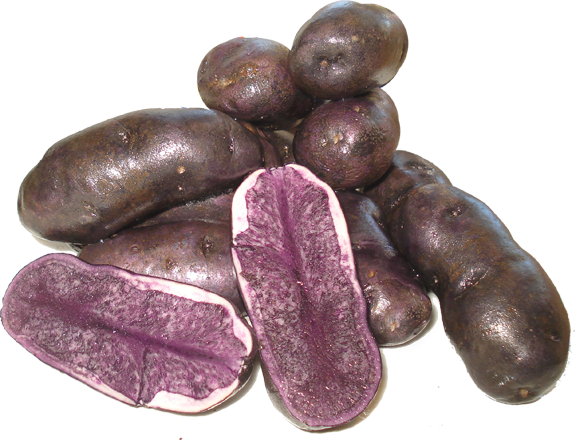
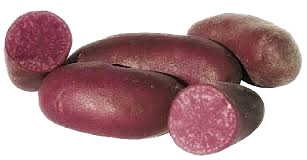 Since I really don’t know a great potato from an average one yet, I ordered from Canada’s prime organic spud expert – all the way from Alberta. You know, the province of the “NDP” Bitumen Queen? Well, Albertans can’t all be as out of date as she is. I’ve had my eyes (ha) on Eagle Creek Seed Potatoes (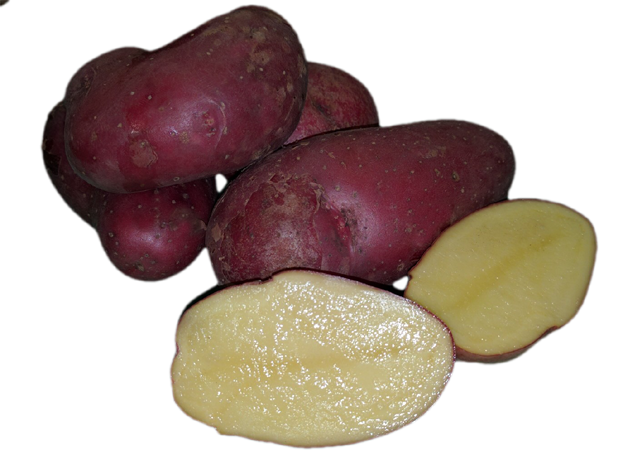
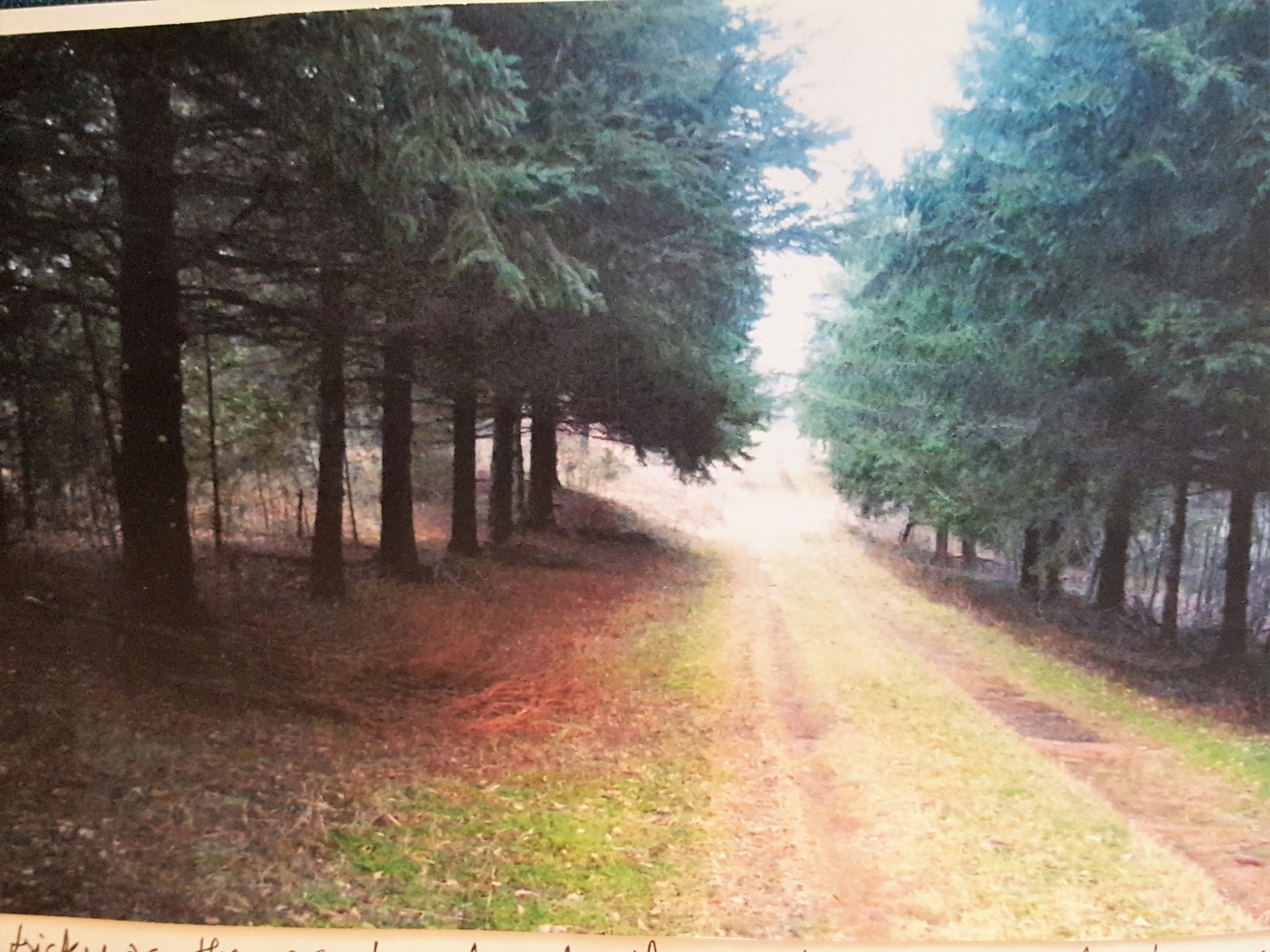


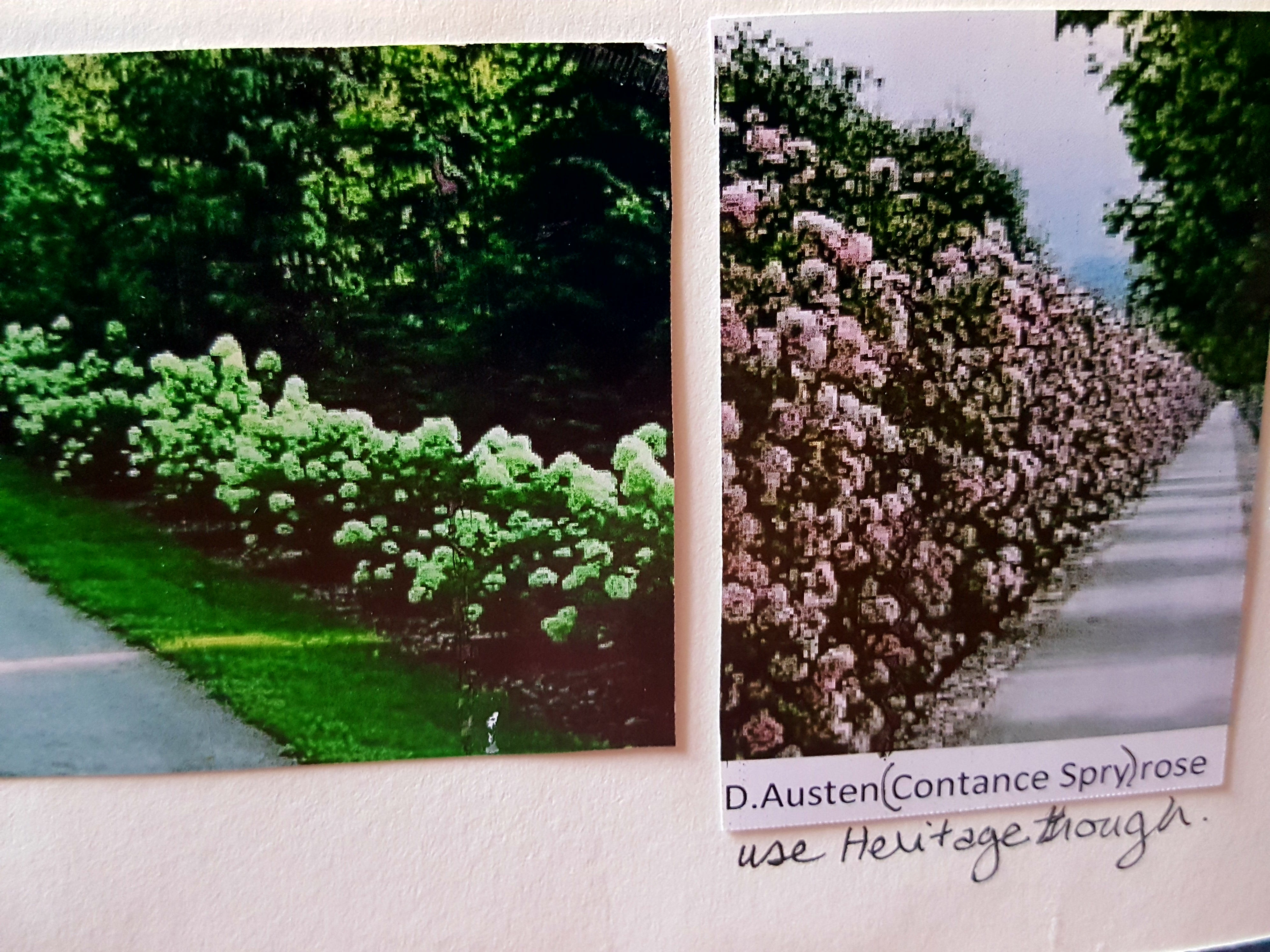
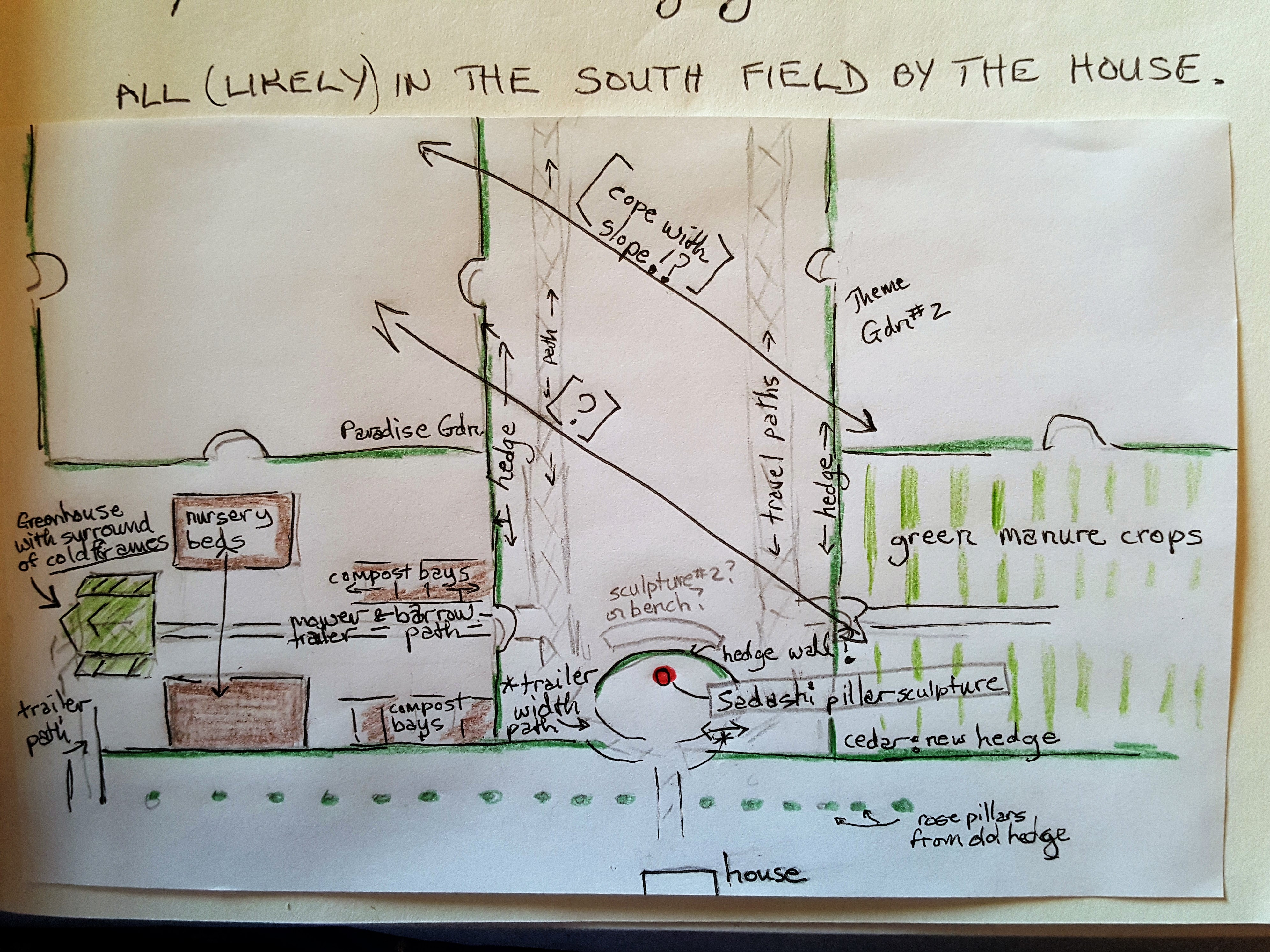
 Here below is my first stab at a cloister fruit garden plan, for my thirty-three distinctly European fruits on order. This plan gelled as I took my family turn to keep hospital vigil over my 100 year old mother-in-law recovering from pneumonia in the dark hours. There is no place flat on this land: gradients may defeat the dream, and labour conservation will determine choices for path and quadrant materials. But I am aiming for an elaboration on the ancient Islamic (Achaemenid, Persian) and French models approaching a traditional Paradise Garden.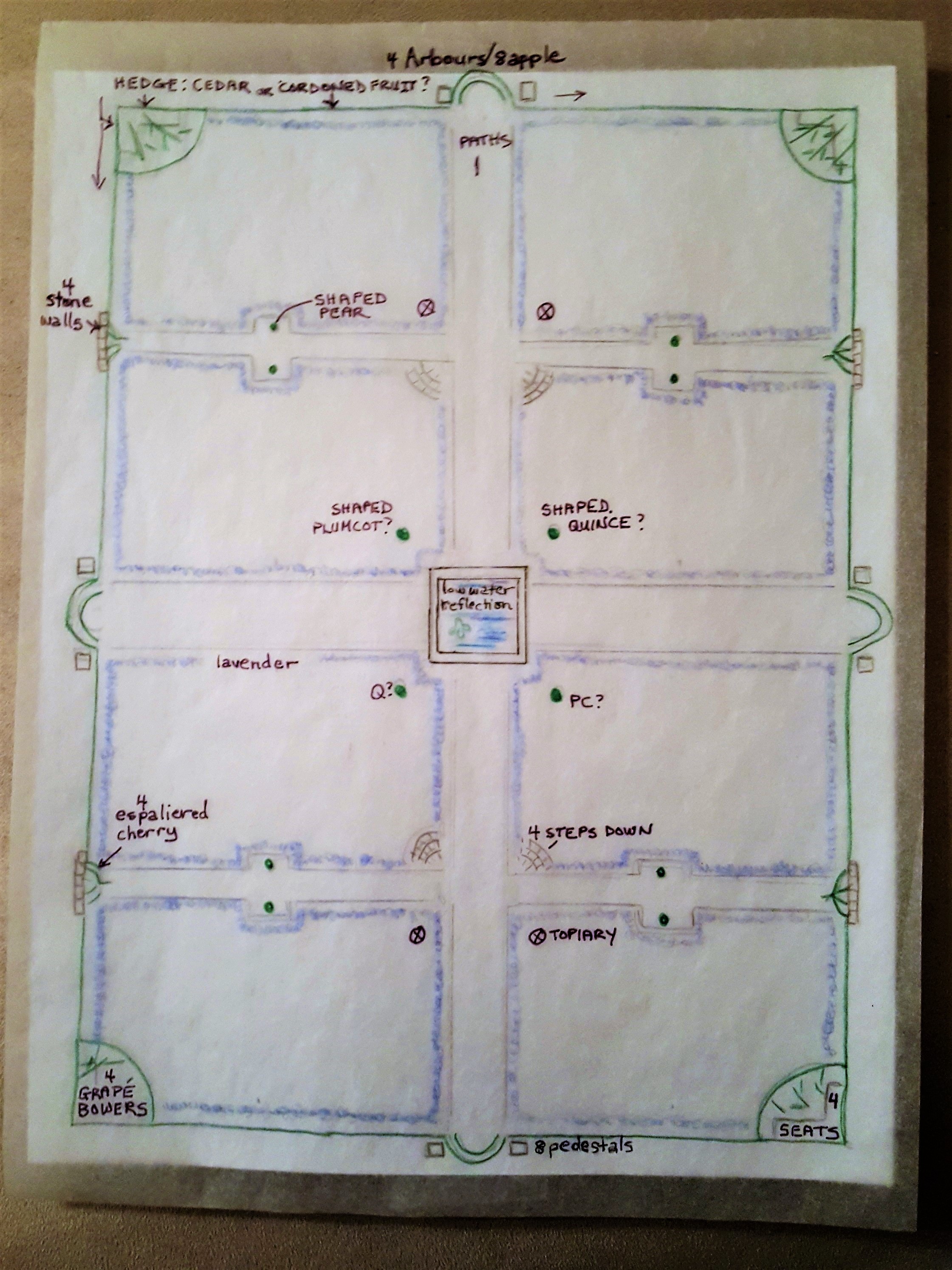
 The French adore their pears, the English their apples and ciders, the Japanese have their own fruit, and old Ontario farm yards are unearthing surprisingly neglected histories surrounding the interrupted arduous journey of Canadian apples. Thankfully, I am not the only one smitten with stories of pippins (“pip of a fruit”) and their stories are written about in all kinds of places, but most importantly in the actions of dedicated breeders who are at last salvaging these nearly lost heritage plants. This spring, I will have planted pears, apples, cherries, plums, quince, plumcots, grapes for the table & pies, and grapes fermented for my goblet.


 “Strong Old Rose fragrance with fruity notes of blackberry, blueberry and damson.” Vase worthy. What more does anyone need? Thank you David Austin, from the bottom of my heart.
 Garden Canada